


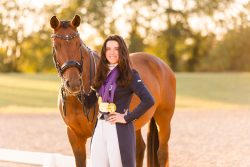
By Laura Scaletti Portraits by Kacy Brown When the pandemic brought the world to a halt, Mary Piller used that pause to follow her heart. “I had planned to go to the University of Kentucky for their pre-med program; however, … [Read more] ...
  |
 |
||
 |
 |
 |
 |
Mary Piller: The Next Generation of Dressage Professional
By Laura Scaletti Portraits by Kacy Brown When the pandemic brought the world to a halt, Mary Piller used that pause to follow her heart. “I had planned to go to the University of Kentucky for their pre-med program; however, when the pandemic had everyone studying from home, I decided to take a gap year
Lauren Nicholson: A Journey from Natural Horsemanship to the Olympics
By Amanda Picciotto Feitosa Portraits by Kacy Brown It was 1987 in southern Illinois when an eventing superstar was born. Lauren Nicholson’s parents were accustomed to seeing horses throughout their neighborhood, but they knew nothing about equestrian sport at the elite level. When Lauren was 6 years old, they helped her pursue lessons at a local stable in southern Illinois, but they had no idea how far those
Laura Reece: A Wonderful Life With the Wonder Horse
By Britney Grover When Laura Reece lists her occupations, she writes: mother, travel agent, equestrian—in that order. She and her husband, Glen, have been married for 20 years and have two daughters, ages 16 and 18. If it weren’t for being a mother, Laura may never have returned to horses—and Danash’s Northern Tempest may never
Hillary Martin: Delighting in Dressage & Teaching
By Laura Scaletti Portraits by Lauren Ann Pace Dressage rider Hillary Martin believes it’s not the level of the rider but their passion for improvement that makes it all worth it. As someone whose passion for horses was cemented early on in her youth, Hillary understands how far passion can take a rider. That drive
Caitlin Silliman: The Roller Coaster World of Eventing
By Becky Henderson Portraits by Adrienne Morella As both an eventer and business owner, Caitlin Silliman is well aware of the need for a solid team behind her. Not only has she had supportive family and friends cheering her on, she has ridden and worked under top-notch professionals such as Susie Beale and Silva and
Michael Middleton: Honoring Mustangs Through Contemporary Ceramics
By Shya Beth Michael Middleton’s ceramic art may not be depicting horses in the traditional sense of paintings and sculptures, yet his work infuses the essence of the wild Corolla Mustangs through horsehair pottery. Never able to recreate the same pattern twice through the process of burning horsehair onto the pot, Michael’s timeless pottery speaks
Allison Springer: From Pony Club to Changing the Eventing World
By Allie Heninger Portraits by Kelly Mudd Bribery can get you far, but for young Allison Springer, it led to a lifetime of horse-crazy pursuits at the highest level of the eventing sport. Raised in the outskirts of Chicago in Barrington, Illinois, Allison and her city-grown parents were enjoying their new life in the country


 |
|
CURRENT ISSUE
SIDELINES SPOTLIGHT
View All
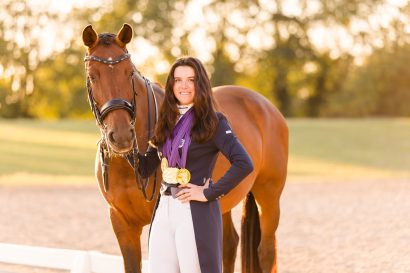
Mary Piller: The Next Generation of Dressage Professional
By Laura Scaletti Portraits by Kacy Brown When the pandemic brought the world to a halt, Mary Piller used that pause to follow her heart. “I had planned to go to the University of Kentucky for their pre-med program; however, … [Read more] ...
FOLLOW ON INSTAGRAM


SPECIAL FOCUS ISSUES
STORY OF THE WEEK
By Laura Scaletti
Portraits by Kacy Brown
When the pandemic brought the world to a halt, Mary Piller used that pause to follow her heart. “I had planned to go to the University of Kentucky for their pre-med program; however, … [Read more]

By Amanda Picciotto Feitosa
Portraits by Kacy Brown
It was 1987 in southern Illinois when an eventing superstar was born. Lauren Nicholson’s parents were accustomed to seeing horses throughout their neighborhood, but they knew nothing about equestrian sport at the … [Read more]

By Britney Grover
When Laura Reece lists her occupations, she writes: mother, travel agent, equestrian—in that order. She and her husband, Glen, have been married for 20 years and have two daughters, ages 16 and 18. If it weren’t for … [Read more]

By Laura Scaletti
Portraits by Lauren Ann Pace
Dressage rider Hillary Martin believes it’s not the level of the rider but their passion for improvement that makes it all worth it. As someone whose passion for horses was

By Becky Henderson
Portraits by Adrienne Morella
As both an eventer and business owner, Caitlin Silliman is well aware of the need for a solid team behind her. Not only has she had supportive family and friends cheering her on, … [Read more]

By Allie Heninger
Portraits by Kelly Mudd
Bribery can get you far, but for young Allison Springer, it led to a lifetime of horse-crazy pursuits at the highest level of the eventing sport. Raised in the outskirts of Chicago in … [Read more]

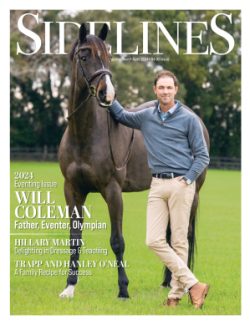
By Kimberly Gatto
Portraits by Melissa Fuller
As a child growing up in Virginia’s hunt country, William “Will” Coleman III developed a lifelong passion for horses. “I was lucky to grow up in a ‘horsey’ family,” Will said. “Both of … [Read more]

By Laura Scaletti
Portraits by Kristie Scholten
Mother-daughter duo Haydeh and Darya Davoudi are working hand in hand to accomplish their equestrian dreams. As Darya focuses on competing in the hunter and equitation rings, Haydeh has immersed herself in Darya’s … [Read more]

By Jessica Sforza
Portraits by Melissa Fuller
Ever since she was a toddler, Ashley Glica’s life revolved around horses—a fitting origin for the now-30-year-old equestrian business owner. Tracing her roots back to Akron, New York, a village 25 miles east … [Read more]

By Britney Grover
Portraits by Isabel J. Kurek
While you won’t see Ron Davis in the show ring, you’ll see the show ring in his work. Ron is the director and producer of documentaries such as “Harry & Snowman,” chronicling … [Read more]


Download Sidelines Digital now from your favorite app store!


Update iOS app. Re-download Google Play and Amazon app.
Follow on Instagram!


Recent Posts
-
May 2024 – Table of Contents
Subscribe for just $9.95 or Order Individual Is... -

Mary Piller: The Next Generation of Dressage Professional
By Laura Scaletti Portraits by Kacy Brown When... -

Lauren Nicholson: A Journey from Natural Horsemanship to the Olympics
By Amanda Picciotto Feitosa Portraits by Kacy B... -

Laura Reece: A Wonderful Life With the Wonder Horse
By Britney Grover When Laura Reece lists her o... -

Hillary Martin: Delighting in Dressage & Teaching
By Laura Scaletti Portraits by Lauren Ann ...


Copyright © 1987 - 2021 Sidelines Magazine
Privacy Policy · Returns & Refunds Policy · Hosting by Lucian Web Service · Login